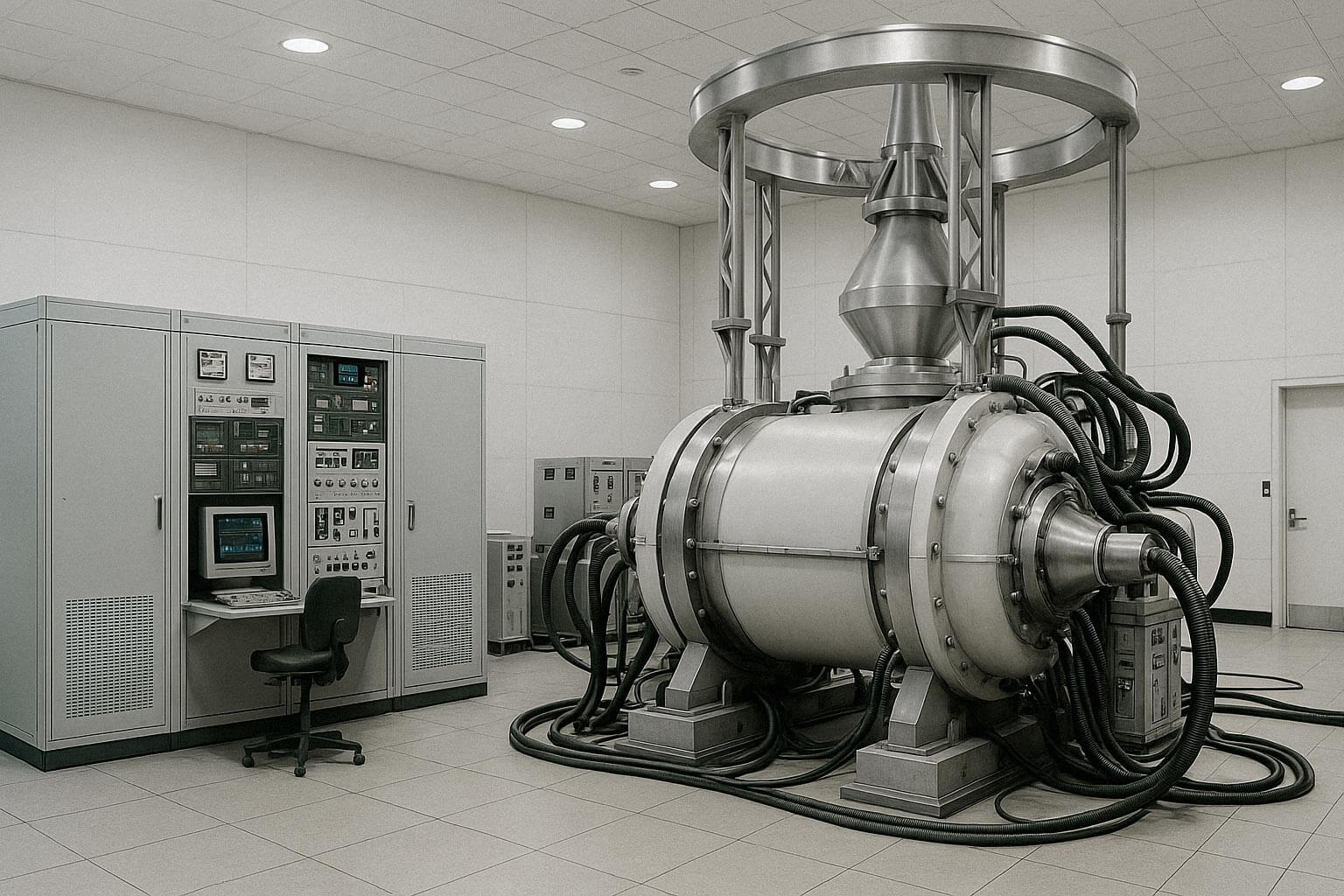
Advances in Resonance Cascade Prevention Modeling
2000-03-18
The Theoretical Materials Division has released a predictive framework upgrade for modeling cascade-prone interactions in high-energy material exposures. Drawing from retrospective telemetry and post-incident kinetic reconstructions, the model integrates a dynamic simulation suite capable of resolving temporal-causal anomalies within live test environments.
The new algorithms incorporate neural-extracted telemetry from classified test cycles, integrating biometric deviation tracking into exotic matter collapse probability forecasting. Lattice-phase mismatch variables, once considered statistically negligible, have now been weighted more significantly within the model to account for observed variances during energy bleed-off cycles.
Real-time monitoring now includes the adaptive re-synchronization of interlock arrays based on fluctuating energy deltas, permitting proactive mitigation of pre-cascade harmonic resonance escalation. Initial simulations suggest a 78.4% decrease in cascade chain propagation risk when models are executed within revised control environments.
Black Mesa continues to prioritize systemic redundancy and failsafe integrity within all active resonance experimentation sectors. Personnel operating within Class-B hazard zones are instructed to remain current with latest Predictive Risk Index (PRI) bulletins and adhere to updated proximity avoidance measures.